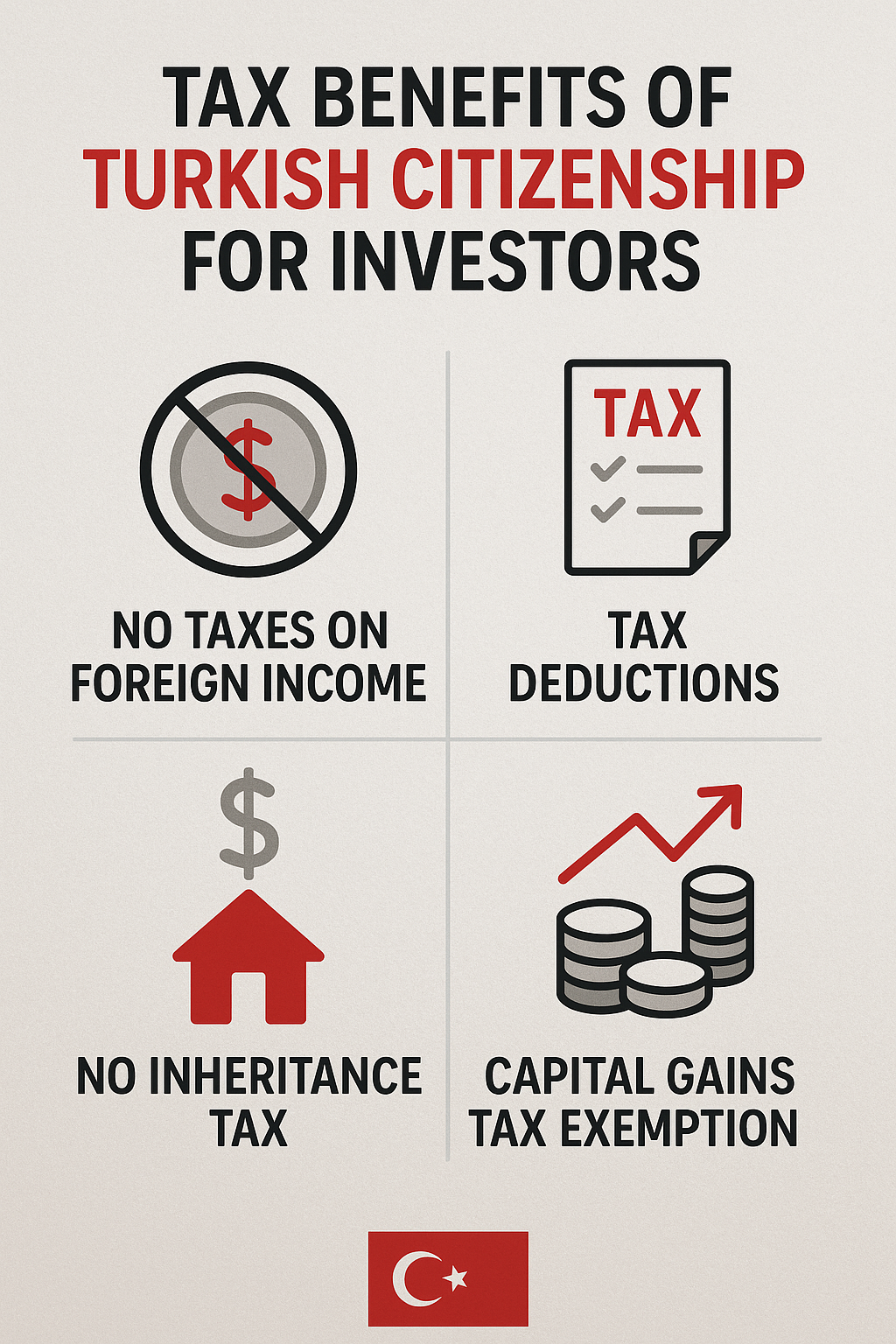
Turkey has become one of the most popular destinations for investors seeking a second passport. Many foreigners are now asking, “What are the risks of buying property in Turkey for citizenship in 2025?” The Turkish Citizenship by Investment (CBI) program continues to attract attention with its relatively low entry cost and fast processing time. By investing at least $400,000 in real estate, investors can apply for Turkish citizenship within months. However, not all investments are safe or profitable.
In 2025, the real estate market in Turkey will remain dynamic but unpredictable. Property prices in cities like Istanbul and Antalya have increased by more than 80% since 2020, according to TurkStat data. While this growth creates opportunities, it also opens the door to risks such as overpriced listings, fake property valuations, and legal complications. Many foreign buyers have faced issues related to unclear title deeds, slow government processing, or currency fluctuations affecting their returns.
Before making such a major financial and legal decision, investors must understand every potential downside. This guide will explain what are the risks of buying property in Turkey for citizenship in 2025, how to recognize them early, and what steps to take to protect your investment. By learning from recent market data and real cases, you can make smarter, safer choices in 2025’s evolving property landscape.
Overview of Turkey’s Citizenship by Investment Program (2025 Update)
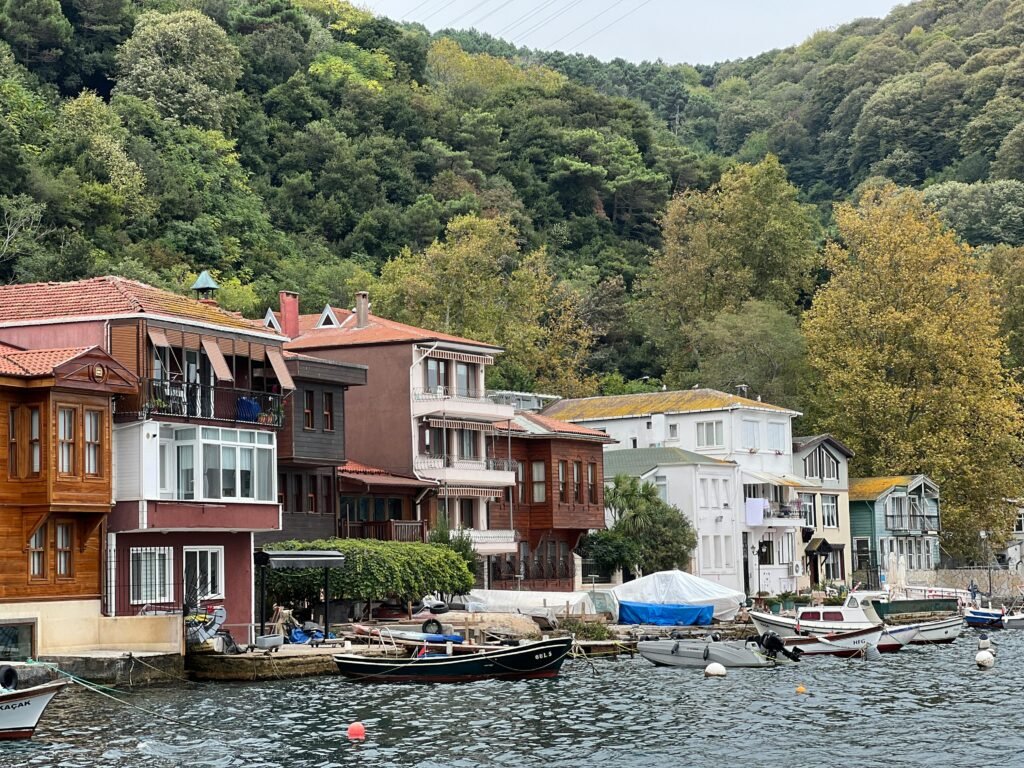
Turkey’s Citizenship by Investment (CBI) program continues to attract global investors in 2025. It offers one of the most affordable paths to a second passport, but it also brings several risks of buying property in Turkey for citizenship that investors should understand before applying. The program has evolved since its launch in 2017, with new verification standards and updated property rules.
Current Requirements and Eligibility
To qualify, a foreign investor must purchase real estate worth at least USD 400,000 and keep ownership for three years. The property can be residential, commercial, or a combination of both. However, each property must be officially appraised and registered in the investor’s name. This rule was strengthened in late 2024 to reduce fraud and fake valuations—one of the common risks of buying property in Turkey for citizenship.
Other routes, such as a $500,000 bank deposit, government bonds, or business investments, remain available. Yet, over 90% of all CBI applicants choose the property option, according to official 2024 Ministry of Interior data. The main reason is its simplicity and potential for capital appreciation.
Why Property Investment Is the Most Popular Route
Buying property for citizenship feels straightforward, but it demands caution. Investors like the real estate option because it combines two goals—citizenship and investment growth. Cities such as Istanbul, Antalya, and Ankara continue to draw foreign interest due to rising tourism and infrastructure development.
However, these same advantages create price inflation and market speculation. Developers often inflate property values to meet the $400,000 minimum, making it easy to overpay. This is one of the biggest risks of buying property in Turkey for citizenship, especially in the 2025 competitive market.
Related Content: Can I Live Permanently in Turkey? Your Ultimate 2025 Guide
In short, while Turkey’s CBI program remains a strong opportunity, investors must approach the property route carefully. Understanding the program’s updated rules, appraisal system, and local regulations can help minimize the financial and legal risks tied to citizenship-based investments.
Main Risks of Buying Property in Turkey for Citizenship (2025 Analysis)
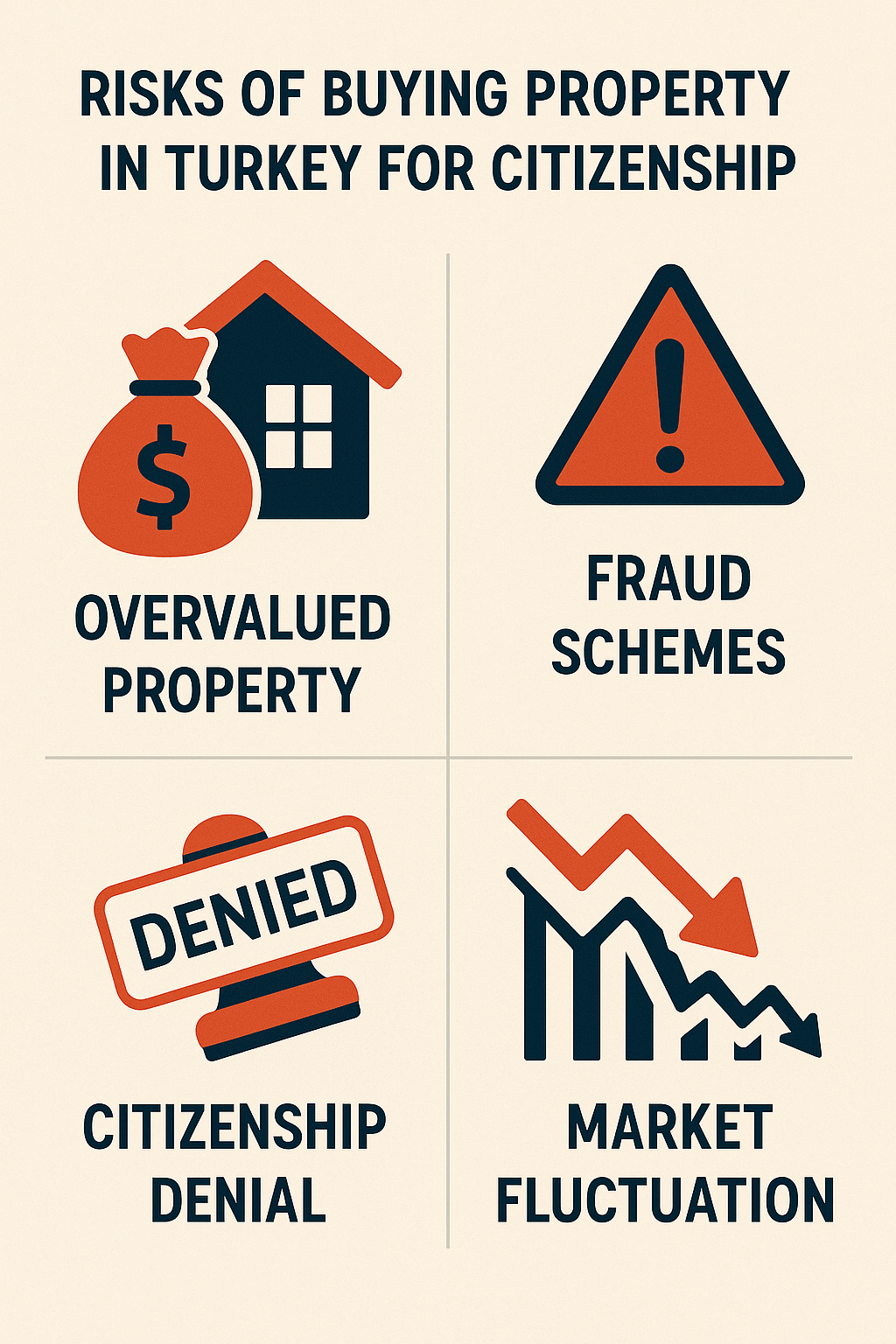
Buying property in Turkey for citizenship can be rewarding, but it also comes with serious challenges. In 2025, the market is more competitive, and new regulations make it even more important to know what to avoid. Below are the main risks of buying property in Turkey for citizenship, explained with examples and data.
1. Overpriced or Inflated Property Valuations
Many developers inflate prices to meet the $400,000 investment requirement. For example, a property listed for $420,000 might actually be worth only $300,000 in the open market. This means you could lose value immediately after purchase. The Turkish government now requires official valuation reports; however, inflated pricing remains common. Always obtain an independent appraisal before making a purchase.
2. Fake or Misleading Title Deeds
Title deed fraud is another serious risk. Some investors discover that the property they bought has already been sold to another buyer or has unpaid debts attached. According to local reports, such scams often target foreign buyers unfamiliar with the Turkish Land Registry System (Tapu Office). To avoid this, always verify deeds through a licensed real estate lawyer before transferring funds.
3. Legal and Bureaucratic Delays
Paperwork errors or missing documents can delay your citizenship application for months. In 2024, many applicants faced processing times exceeding 8 months due to incorrect property registration or incomplete appraisals. These delays are frustrating and can cause financial stress if you plan to resell later. Working with government-approved developers can minimize this risk.
4. Currency Fluctuation Risks
The Turkish lira remains volatile. Between 2022 and 2024, it lost over 35% of its value against the US dollar. If you buy property in lira, the real value of your investment can drop quickly. Many investors now prefer projects priced directly in USD to reduce exposure to currency risk.
5. Market Volatility and Low Liquidity
The real estate market in Turkey can change fast. Oversupply in cities like Istanbul has led to slower resale opportunities. Remember, you must hold the property for at least three years to maintain citizenship eligibility. If prices fall during that time, selling afterward might not be profitable.
6. Misleading Developer Promises
Some developers advertise “guaranteed rental income” or “buyback programs,” but not all deliver. There have been cases where promised rental returns never materialized. Always check the developer’s track record, visit the site, and ask for official contracts.
Overall, the risks of buying property in Turkey for citizenship often come from a lack of due diligence and overreliance on sales agents. By understanding these 2025-specific risks and verifying every step, you can protect your investment and avoid costly mistakes.
Legal and Regulatory Risks for Foreign Investors

Legal compliance is one of the biggest challenges for foreigners investing in Turkish real estate. While the Citizenship by Investment program is well-established, laws and procedures change frequently. Understanding these rules is key to avoiding major risks of buying property in Turkey for citizenship.
1. Changes in CBI Regulations (2025 Policy Updates)
The Turkish government reviews its Citizenship by Investment (CBI) program annually. In 2025, discussions are underway about raising the minimum investment threshold above $400,000 or tightening eligibility requirements. Similar policy changes happened in 2018 and 2022, when the minimum investment was increased from $250,000 to $400,000.
Such regulatory shifts can affect both ongoing and future applications. For instance, investors who signed purchase agreements before a change might face delays or need to submit new documents. This uncertainty is one of the key risks associated with buying property in Turkey for citizenship, particularly for those purchasing off-plan properties that can take several months to complete.
2. Taxation and Compliance Risks
Foreign investors often overlook local tax obligations. Property owners must pay annual real estate tax and, if they sell later, capital gains tax. Misreporting or missing these payments can lead to fines or even legal disputes. Additionally, if your property generates rental income, you must file a tax declaration in Turkey. Without proper guidance, it’s easy to make errors that could impact your citizenship process.
3. Residency vs. Citizenship Confusion
Many foreign buyers mix up residency permits with full citizenship rights. Owning property under $400,000 qualifies you only for a residence permit, not citizenship. Some agents mislead clients by promising citizenship for lower investments. This misunderstanding leads to disappointment and legal issues. Always verify your eligibility directly with a licensed immigration lawyer or the official Turkish government portal.
I hope we understand the legal and regulatory risks of buying property in Turkey for citizenship that arise from fast-changing laws, complex tax obligations, and unclear program rules. Staying updated and working with certified professionals can help protect your investment and ensure a smooth path to citizenship.
Risk Comparison Table: Property Investment in Turkey vs Other CBI Programs (2025)
When evaluating the risks of buying property in Turkey for citizenship, it helps to compare Turkey’s program with other global Citizenship by Investment (CBI) options. While Turkey offers a faster and more affordable route, programs in Greece and Portugal are often seen as more stable. Each country has its pros and cons related to investment safety, regulation, and long-term value.
Below is a 2025 comparison based on real estate investment data and market trends:
| Risk Factor | Turkey (2025) | Greece Golden Visa (2025) | Portugal CBI (2025) |
|---|---|---|---|
| Minimum Investment | $400,000 | €250,000 – €400,000 | €500,000 |
| Property Valuation Issues | High risk due to inflated prices | Moderate | Low |
| Regulation Stability | Moderate; frequent updates | High; stable EU rules | High, stable EU rules |
| Currency Risk | High (TRY depreciation over 35% since 2022) | Moderate (EUR stable) | Low (EUR stable) |
| Processing Time | 6–12 months | 8–12 months | 12–18 months |
| Resale Flexibility | Limited; must hold for 3 years | Moderate | Easy resale options |
| Market Liquidity | Medium; high demand but low resale profit | High | High |
| Average Rental Yield | 4–6% | 3–5% | 2–4% |
From the table, it’s clear that Turkey remains a strong choice for those seeking faster citizenship, but it carries higher financial and market exposure. The risks of buying property in Turkey for citizenship mainly come from currency instability, inflated valuations, and limited resale flexibility.
In contrast, Greece and Portugal provide more regulatory stability, though they require higher entry costs or longer processing times. For investors who prioritize security over speed, EU-based programs may offer better long-term value. However, for those willing to take calculated risks and seek faster results, Turkey’s CBI program can still be a worthwhile option—if all due diligence steps are followed carefully.
How to Minimize Risks When Buying Property for Turkish Citizenship
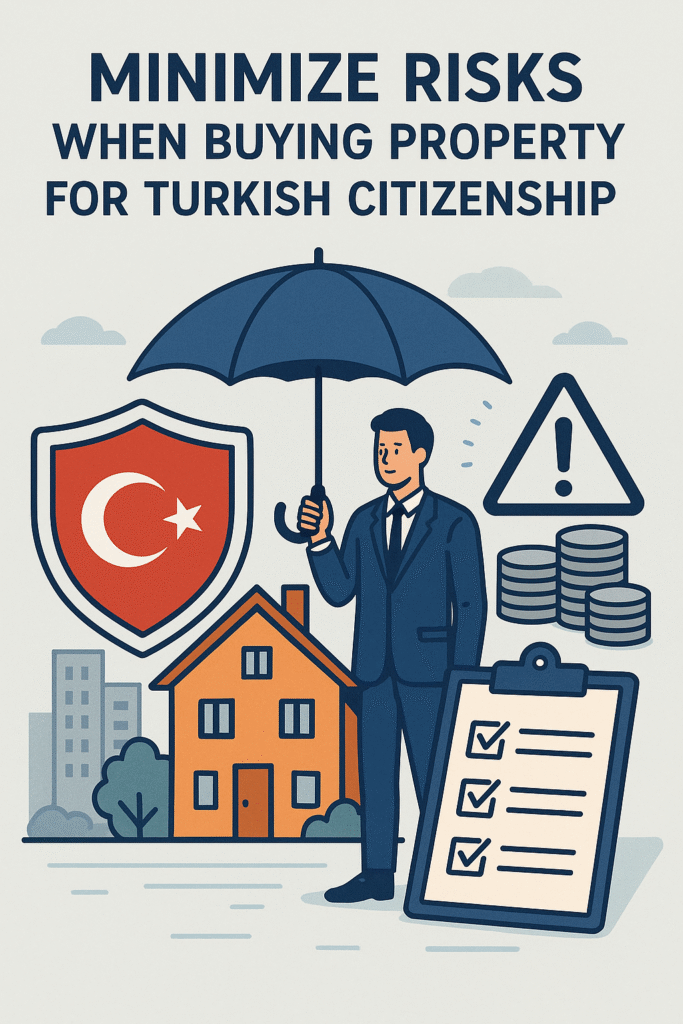
The risks of buying property in Turkey for citizenship can be reduced with the right preparation and expert guidance. In 2025, stricter rules and better verification systems will help protect investors, but caution is still essential. Below are the best ways to minimize risks and make your citizenship journey smooth and secure.
1. Work with Licensed Real Estate and Legal Advisors
Always choose licensed real estate agents and immigration lawyers. Check if they are registered with the Turkish Chamber of Commerce or the Bar Association. Many foreign investors lose money by trusting unregistered brokers. A certified advisor ensures your property meets the legal requirements for citizenship and that all documents are valid.
2. Conduct a Detailed Property Due Diligence
Before buying, verify ownership, valuation, and zoning status. Request a Tapu (title deed) check from the Land Registry Office to confirm there are no mortgages or disputes. In 2024, over 15% of rejected CBI applications were linked to incomplete or invalid property documents. Proper due diligence protects you from fraud and rejection.
3. Choose Government-Approved Projects Only
Invest in developments that have been pre-approved for the Citizenship by Investment (CBI) program. These projects follow official standards and are regularly audited. Avoid off-plan properties from unknown developers that might not qualify for citizenship after construction.
4. Secure Payments Through Escrow Accounts
Make all payments through a bank escrow account. This ensures your money is released only when property ownership is confirmed. Escrow systems are widely used in 2025 and offer an extra layer of security against scams.
5. Stay Updated with 2025 Regulation Changes
CBI laws in Turkey can change suddenly. Follow official updates from the Directorate of Migration Management (Göç İdaresi) or reputable law firms. Staying informed helps you react quickly if new investment limits or rules appear.
By following these steps, investors can significantly reduce the risks of buying property in Turkey for citizenship. Careful research, legal advice, and verified transactions will ensure your investment is both safe and eligible for Turkish citizenship in 2025.
Conclusion
Turkey’s Citizenship by Investment program remains one of the most attractive in 2025. It offers a clear legal path, fast processing, and affordable entry compared to similar programs in Europe. However, the opportunity also comes with challenges. The risks of buying property in Turkey for citizenship include inflated prices, unstable currency, and unclear property ownership. These issues can lead to financial losses or delays in citizenship approval if not handled carefully.
Still, with the right strategy, these risks can be managed. Investors who work with licensed agents, conduct thorough due diligence, and follow updated government rules are far more likely to succeed. Turkey’s real estate market continues to grow, supported by strong foreign demand and new infrastructure projects, but buyers must stay informed and realistic about potential downsides.
In the end, the risks of buying property in Turkey for citizenship should not discourage investment, but they should encourage smarter decisions. By combining legal guidance, verified documentation, and careful planning, you can secure both your property and your future as a Turkish citizen in 2025.
FAQs – What are the Risks of Buying Property in Turkey for Citizenship in 2025?
1. Is buying property in Turkey safe for foreigners in 2025?
Ans: Yes, it is generally safe if you follow proper legal steps. However, property scams, fake title deeds, and inflated prices still exist. Always verify ownership through the Land Registry Office and work with licensed agents to reduce the risks of buying property in Turkey for citizenship in 2025.
2. Can I lose my investment if my citizenship application is rejected?
Ans: In most cases, no, you still own the property even if your citizenship is denied. But if the property fails to meet the official CBI valuation or legal standards, you may not qualify. This is one of the key risks of buying property in Turkey for citizenship in 2025, especially when buying from unverified developers.
3. How can I verify if a property qualifies for the citizenship program?
Ans: Check if the project is government-approved and ensure the valuation report confirms a minimum worth of $400,000. You can also ask your lawyer to verify eligibility through the General Directorate of Land Registry and Cadastre before you make a payment.
4. What happens if Turkey changes its CBI rules after I buy the property?
Ans: If the rule change occurs after your official application is submitted, your file usually follows the old regulation. However, if you haven’t applied yet, new laws will apply. That’s why staying updated with official announcements is crucial.
5. Can I sell the property before three years without losing citizenship?
Ans: No. To maintain your Turkish citizenship, you must keep the property for at least three years. Selling earlier can lead to citizenship revocation or cancellation of your passport.
6. Which cities in Turkey are safest for real estate investment in 2025?
Ans: In 2025, Istanbul, Antalya, and Ankara remain top choices for foreign investors. These cities offer stable demand, better infrastructure, and verified developers. Coastal areas like Alanya and Bodrum are also popular but require extra caution due to higher instances of overvalued properties.